Skirting Board Painting in Newark-on-Trent: Refresh Your Interiors Without the Mess
Skirting board painting in Newark done right makes a real difference to any room. Here's what works, what to avoid, and how JB Services can help.

Skirting board painting in Newark: why it matters more than you might think
Fresh walls can transform a room. But if the skirting boards are scuffed, yellowing or chipped, the whole finish still looks tired. Skirting boards take a beating every day: feet, hoovers, mops and furniture all take their toll. Getting them painted properly, with the right prep and the right product, is one of the quickest ways to make an interior feel genuinely finished.
We do a lot of interior painting across Newark and the surrounding villages and outlying areas of Nottinghamshire. Skirting boards come up on almost every job, whether as part of a full room repaint or as a standalone refresh. Here is what we have learnt, and what you should know before you start.
Why skirting boards are harder to paint than they look
It sounds simple. Brush, tin of white gloss, done. In practice, skirting boards are one of the trickier bits of woodwork to get right. A few reasons:
- They sit right at eye level when you are on your knees, so any brush marks, drips or missed patches are obvious.
- They collect dust, grease and scuff marks that need cleaning off properly before any paint goes on.
- The junction with the floor and wall is a fiddly line to cut in neatly, especially on older properties where nothing is quite straight.
- Old gloss paint can be thick and uneven, built up over years of previous coats, and that texture shows through if you skip the prep.
None of this is insurmountable. But it does mean that rushing the job, or skipping prep to get straight to painting, will show.
The prep is where the result is decided
Good skirting board painting is 70% preparation. Here is what proper prep actually involves:
- Clean the surface. Sugar soap and warm water removes grease, dust and grime. Let it dry fully before you do anything else.
- Fill any holes, dents or cracks. A flexible decorator's filler works well on wood. Sand it back flush once dry.
- Sand the existing paint. A light sand with medium-grit paper (around 120 grit) gives the new coat something to grip. It also knocks back any rough edges or drips from previous jobs.
- Wipe down again. Sanding creates fine dust that settles back onto the surface. A tack cloth or damp lint-free cloth picks it up.
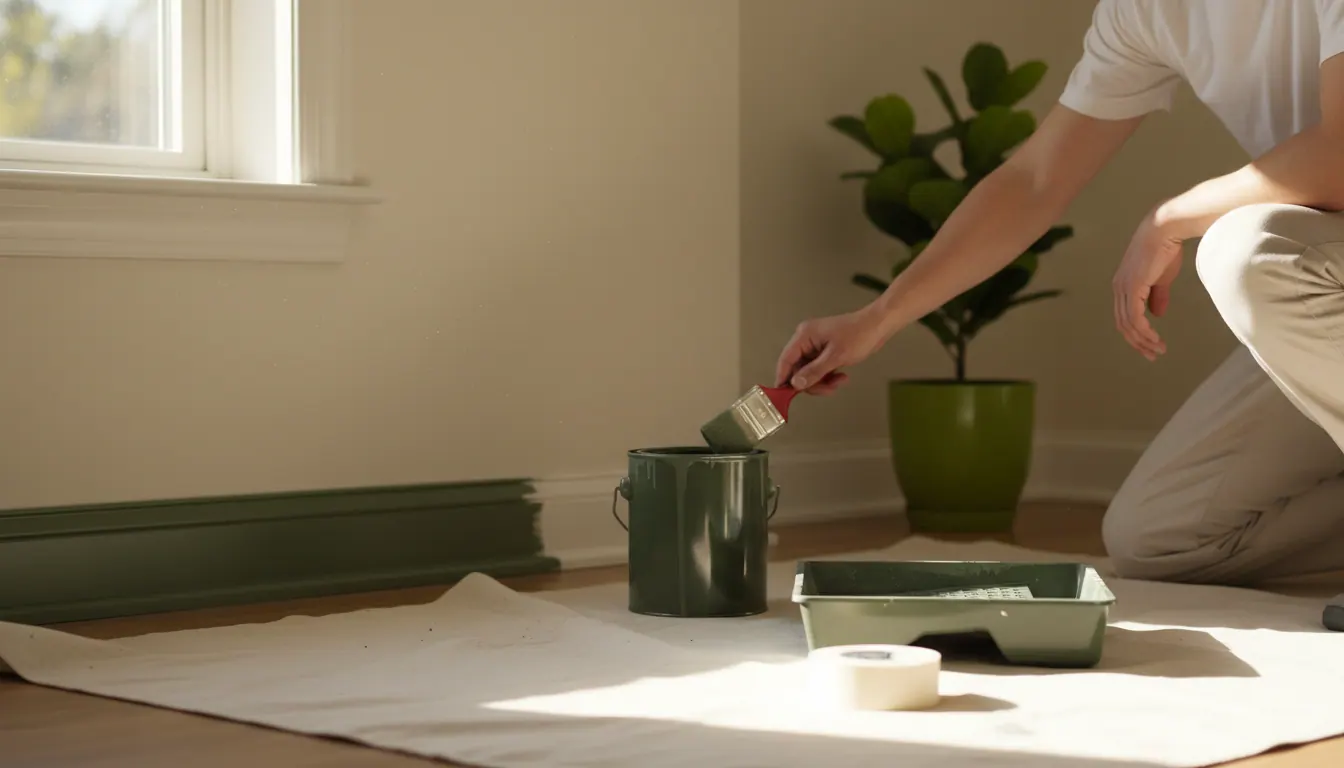
- Mask the floor and wall junction. Low-tack masking tape along the top edge and along the floor line saves a lot of careful cutting in, especially on carpets or hard floors where a paint bleed would be very obvious.
- Prime bare wood or filled areas. If you have sanded back to bare wood anywhere, a wood primer or a coat of undercoat stops the topcoat soaking in unevenly.
Skipping any of these steps is where most DIY skirting board jobs go wrong. The paint peels, the finish looks patchy, or brush marks are visible across the whole length.
Choosing the right paint for skirting boards
The traditional choice for skirting boards is oil-based gloss. It gives a hard, durable, easy-to-wipe finish. The downside is the drying time (often overnight between coats) and the strong smell, which means good ventilation is a must.
Water-based satinwood and water-based gloss have improved a lot in recent years. They dry faster, the smell is much less, and the brushes wash out in water. The finish is slightly softer than oil-based gloss, but for most homes it holds up very well.
Satinwood (a mid-sheen finish, somewhere between matt and full gloss) has become popular for skirting boards and woodwork generally. It shows fewer brush marks than full gloss and suits the softer, more relaxed interiors that many people prefer now.
When we quote a job, we are happy to use paint you have already bought, or we can bring what is needed. Either way works for us.
How many coats does skirting board painting actually need?
On well-prepared skirting boards that are already painted and in reasonable condition, two coats of a good quality topcoat is usually the right answer. The first coat seals and evens out the surface; the second coat gives the full depth of colour and sheen.
If the boards are bare wood, heavily stained, or you are making a big colour change (dark to white, for example), you will likely need an undercoat plus two topcoats. Trying to skip the undercoat and just pile on extra topcoats rarely gives the same result.
Allow proper drying time between coats. Rushing this is one of the most common mistakes. A coat that feels dry to the touch is not always ready for the next coat, especially in cooler or more humid rooms.
Autumn is actually a good time for interior woodwork
As the weather turns in Nottinghamshire, it makes sense to shift focus indoors. Skirting boards, doors, frames and trim all benefit from a refresh before the heating goes on properly for winter. Central heating dries the air out, which can cause old paint to crack or flake on woodwork that was already struggling.
Getting the skirting boards and woodwork sorted now, before the heating season is in full swing, means the paint has good conditions to cure and you go into the colder months with everything looking sharp. We see a real uptick in interior decorating enquiries across Newark and the surrounding areas in autumn for exactly this reason.
If you are already thinking about the walls, it is worth combining the woodwork at the same time. It is more efficient and the finished room looks properly done rather than piecemeal. You might find our article on interior painting in Newark-on-Trent useful for a broader look at what a full room refresh involves.
What a professional finish actually looks like
A well-painted skirting board should have:
- An even sheen with no visible brush marks
- Clean, straight edges at the top (where the board meets the wall) and the bottom (where it meets the floor)
- No drips, runs or holidays (missed patches)
- A consistent colour across the full length, including inside corners and around door architraves
This is achievable with patience and the right technique. The brush matters too. A good quality 2-inch angled brush makes cutting in along the floor and wall junction much easier than a cheap brush that splays out and loses its edge.
What one of our customers said
Terry Brooks, who had us in for a re-mastic job (sealing shower trays, bath and kitchen worktops), left us this review and mentioned he intends to have us back for decorating:
We were lucky to find Jonny of JB Services, he listened carefully to our needs, reviewed the job and set a visit time two weeks later. He arrived on time on the agreed date and got stuck into the job at hand, which was to re mastic our shower tray, bath and kitchen unit tops, he did a very professional job and we are delighted. He pre quoted a reasonable price and we paid direct to his business account. We intend to have Jonny back in the near future to do some decorating. We trust him and his work. Terry Brooks.
That last line is the one that means the most to us. Trust is built by turning up when you say you will, quoting honestly and doing the job properly. That is how we work on every visit, whether it is a full repaint or a single room's worth of skirting boards.
Skirting boards as part of a bigger decorating job
Most of the time, skirting boards are not painted in isolation. They are part of a wider interior refresh: walls, ceiling, doors, frames and trim all done together. That is the most efficient way to approach it and gives the most satisfying result.
If you are also thinking about wallpaper removal before redecorating, it is worth reading our piece on wallpaper removal in Newark-on-Trent which explains why stripping properly before you paint makes a real difference to the final finish.
We cover Newark and the surrounding villages and outlying areas of Nottinghamshire. Every job is quoted individually once we have had a look at what is involved. No call-out fee for the quote, no obligation.
Frequently asked questions
Do I need to sand skirting boards before painting them? Yes, in almost every case. A light sand with around 120 grit paper gives the new paint something to grip, knocks back any rough edges from old coats, and helps you spot any areas that need filling. Skipping it is the most common reason a new coat of paint looks uneven or starts to peel.
What is the best paint for skirting boards in a family home? A water-based satinwood or water-based gloss is a practical choice: it dries faster than oil-based gloss, the smell is much less, and it is easy to wipe clean. Full oil-based gloss gives a harder finish but takes longer between coats and needs good ventilation. Either works well with proper prep.
Can you just paint over old skirting boards without stripping them back? Usually, yes, as long as the existing paint is sound (not flaking or bubbling), the surface is clean and you sand lightly before you start. If the old paint is thick and uneven, or there are multiple layers of gloss that are starting to lift, it is worth sanding back more thoroughly or using a chemical stripper on the worst sections first.
Do you cover skirting board painting in Newark and the surrounding villages? Yes. We work across Newark-on-Trent and the surrounding villages and outlying areas of Nottinghamshire. Whether it is a single room's skirting boards or a full interior repaint including all the woodwork, get in touch and we will come and have a look before giving you a quote.
Ready to get your skirting boards and woodwork looking properly finished? Call us on 07902 258428 for a free, no-obligation quote. We will come and have a look at what is needed and give you a straight answer on what is involved.
“The best in town 🙏”